Scratching above the fireplace, chirping inside the walls or a strong smell when you open the damper are classic signs that something has moved into your chimney. In Connecticut, animals in the chimney are most common in spring, when raccoons and birds look for a safe place to raise their young, and in late fall, when squirrels and other animals look for a warm place to shelter.
This guide explains how to tell which animal you are dealing with, what to do (and what not to do) when you find one, and how to keep animals out of your chimney for good.
Which Animals Get Into Chimneys in Connecticut?
Raccoons
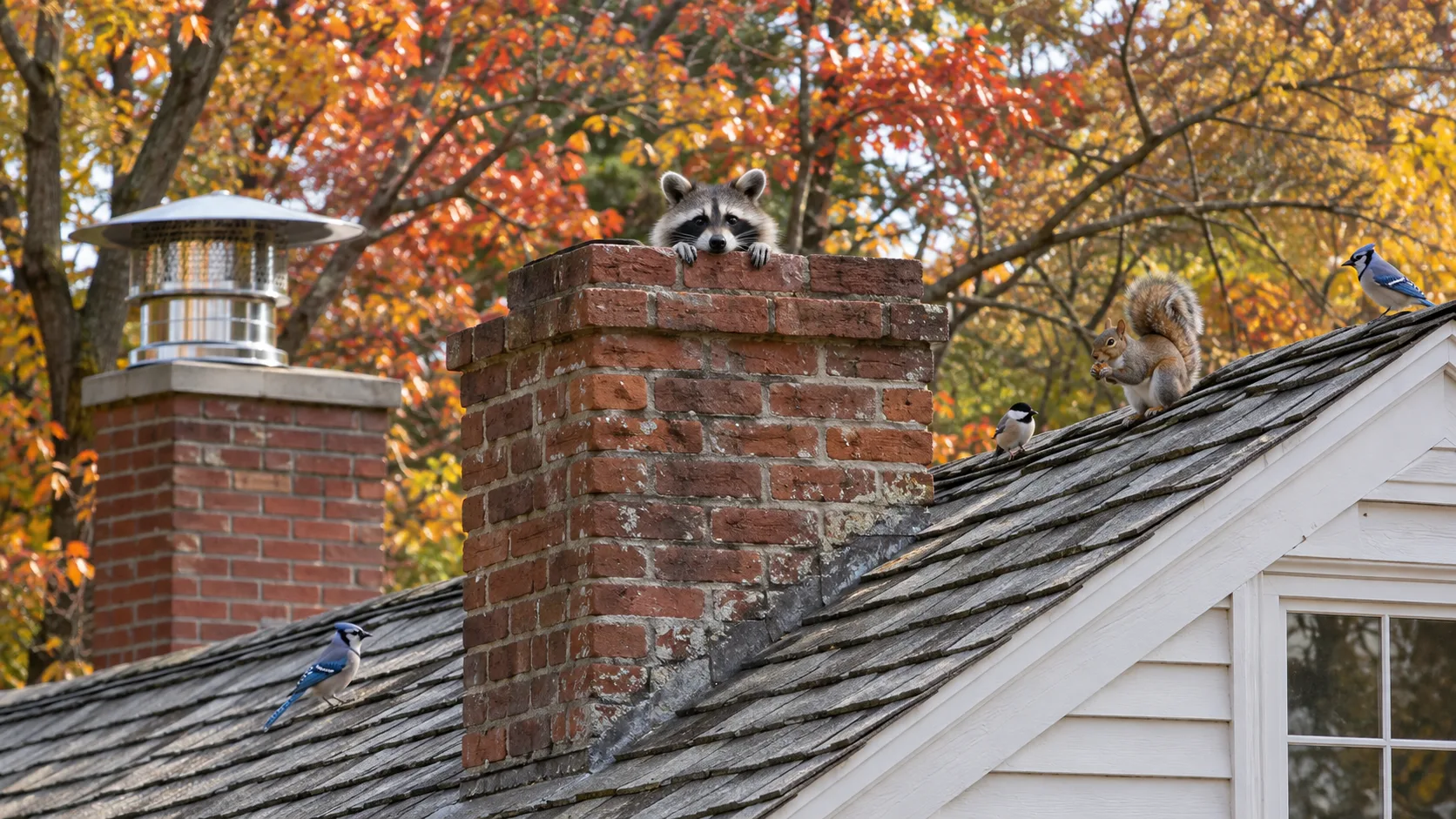
Raccoons are strong climbers and often use the smoke chamber or the top of a closed damper as a den. Mothers commonly give birth inside chimneys in spring. Signs include heavy thumping, scratching and chattering sounds, often at night.
Birds and chimney swifts
Many birds will nest on the cap or crown, but chimney swifts actually live and nest inside the flue during the warmer months. They make high-pitched twittering sounds, especially when the young are being fed. Chimney swifts are a protected species under the federal Migratory Bird Treaty Act, so active nests cannot be removed. They migrate south in the fall, and the chimney can be cleaned and capped after they leave.
Squirrels
Squirrels often fall into an uncapped chimney and then cannot climb back out of the smooth flue liner. You may hear frantic scratching during the day. A trapped squirrel can also end up in the firebox or even inside the house.
Bats
Bats can roost in chimneys and gaps around the crown. You may notice a squeaking sound at dusk or droppings in the firebox. Bats are protected in many cases and should only be handled by wildlife professionals.
Other wildlife
Mice, chipmunks and occasionally opossums can also find their way in, especially through gaps in damaged masonry or flashing.
Signs an Animal Is Living in Your Chimney
- Scratching, scurrying or flapping sounds above the fireplace
- Chirping or crying sounds, which often mean babies are present
- A strong, unpleasant odor coming from the fireplace, especially in humid weather
- Nesting material, leaves, twigs or droppings in the firebox
- A damper that will not open or close properly because something is sitting on it
- Smoke backing up into the room the first time you light a fire
What to Do If You Find an Animal in Your Chimney
- Do not light a fire. Smoking an animal out rarely works. It can kill young animals that cannot climb, leave a decomposing carcass in the flue, or ignite dry nesting material and start a chimney fire.
- Keep the damper and fireplace doors closed. This keeps the animal from getting into your home. If you have no glass doors, block the opening securely.
- Do not reach in or try to grab the animal. Raccoons, bats and other wildlife can carry rabies and other diseases. A frightened animal will defend itself.
- Listen and identify. Note when you hear the sounds and what they sound like. This helps the professional decide on the right approach.
- Call the right professional. For live raccoons, bats or other wildlife, a licensed wildlife control operator handles humane removal. Once the animals are out, a chimney professional removes the nest, cleans the flue, checks for damage and installs protection.
Patience matters in spring. In many cases, a raccoon mother will move her young out on her own once they are old enough, or after a professional encourages her to leave. Removing young animals without the mother often leads to them dying inside the chimney.
Why Animals in the Chimney Are a Real Problem
It is tempting to think a bird’s nest is harmless, but animals in the chimney create several risks:
- Fire hazard. Nests made of twigs, leaves and grass are highly flammable and can block the flue.
- Carbon monoxide. A blocked flue can push combustion gases back into the house. This is especially dangerous if a furnace, boiler or water heater vents through the same chimney.
- Damage. Raccoons can tear damper parts, damage liners and pull apart insulation.
- Health concerns. Droppings, parasites and decomposing animals create odors and contamination.
After any animal has been in the flue, it is a good idea to schedule a chimney inspection before you use the fireplace again.
How to Keep Animals Out of Your Chimney for Good
Install a quality chimney cap
A properly sized chimney cap with stainless steel mesh is the single most effective way to keep animals out. It also keeps rain, snow and debris out of the flue. The mesh should be small enough to block birds and squirrels but large enough to let smoke draft freely. Learn more about our chimney cap installation.
Repair the crown and masonry
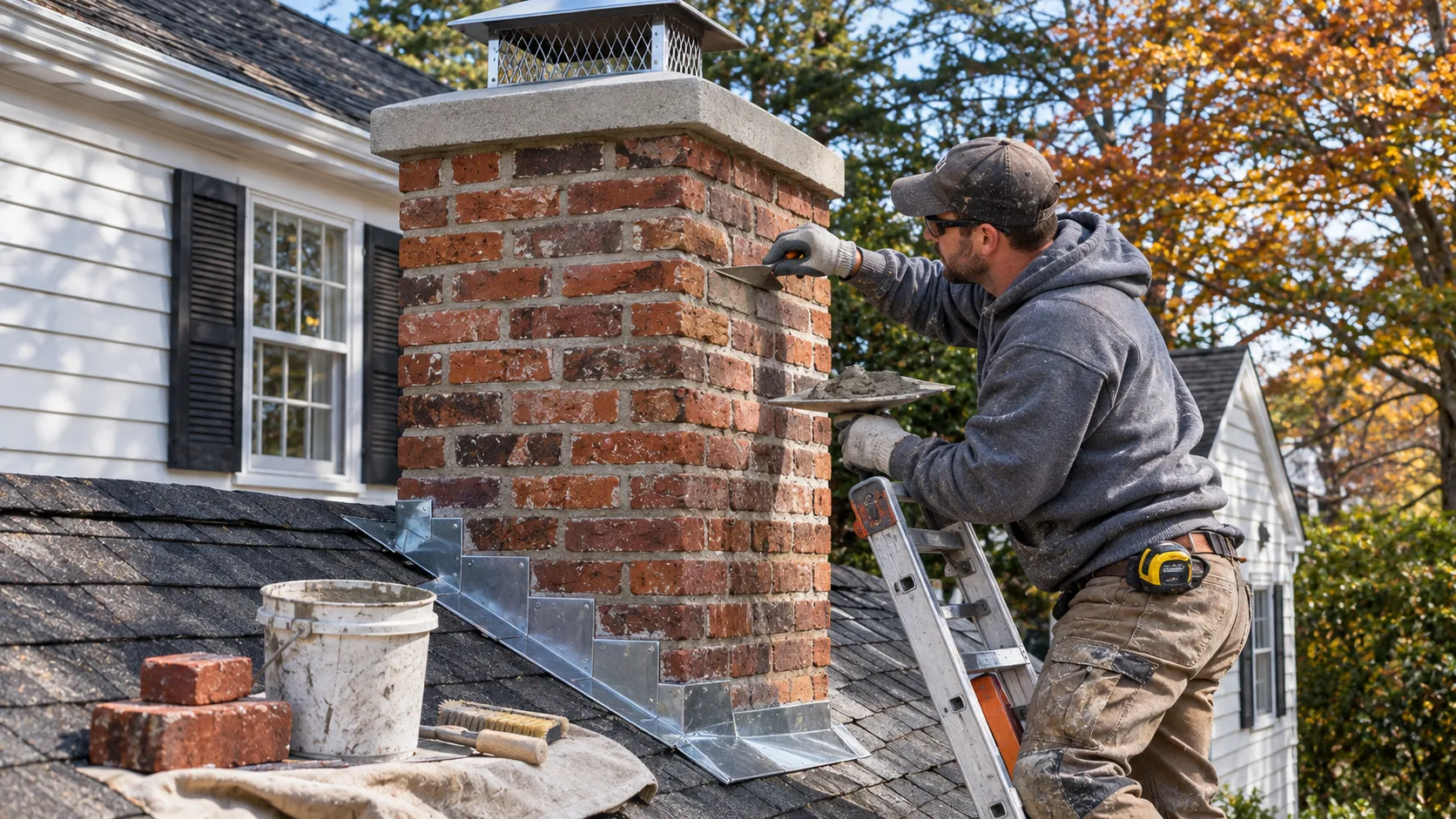
Animals take advantage of cracked crowns, loose bricks and gaps around the flue. Sealing these openings removes the easy entry points.
Check the damper
A damper that closes tightly gives a second layer of protection between the flue and your living space. A top-sealing damper also helps keep animals out from the top.
Trim overhanging branches
Tree limbs that hang over the roof are bridges for squirrels and raccoons. Keep branches several feet away from the chimney.
Inspect every year
Caps can loosen or rust, especially after storms. An annual inspection catches damage before an animal finds the opening. If you have noticed any of the warning signs your chimney needs professional cleaning, address them at the same visit.
Animals in Chimney FAQ
When is the best time to cap my chimney?
The best time is before nesting season, ideally in late winter or early spring, or in the fall after chimney swifts have migrated. A chimney should never be capped while animals are still inside.
Will a chimney cap affect how my fireplace drafts?
A correctly sized cap does not reduce draft. In many cases it improves performance by blocking downdrafts and rain.
How do I get rid of the smell after an animal was in the chimney?
The odor usually comes from nesting material, droppings or a dead animal in the flue. A professional chimney cleaning removes the source. Air fresheners only mask it.
Does homeowners insurance cover animal damage to a chimney?
Many policies exclude damage caused by rodents and wildlife, but coverage varies. Check your policy and keep photos and the inspection report if you plan to file a claim.
Protect Your Chimney Before Nesting Season
Central CT Chimney helps homeowners across Central Connecticut clean out nests and debris, repair damaged crowns and dampers, and install durable caps that keep wildlife out. After the animals are gone, we can also provide professional chimney cleaning so your fireplace is safe to use again.
Call or text 860-321-8682 to schedule a cap installation or inspection.