If you have a wood burning fireplace, you have probably heard about creosote buildup. It is one of the most common chimney maintenance concerns and a major reason why regular cleaning is important.
Creosote forms naturally during the wood burning process, but excessive accumulation inside a chimney can create serious safety risks.
For Connecticut homeowners who use fireplaces throughout the winter, understanding how creosote develops, how to recognize it, and how to reduce buildup is an important part of responsible fireplace maintenance.
What Exactly Is Creosote?
Creosote is a combustible residue produced when wood burns and releases smoke containing gases, vapors, and particles.
As smoke travels through the chimney, some of these substances cool and condense on the interior walls of the flue.
Over time, the resulting deposits can accumulate and form layers of creosote.
The amount of buildup depends on factors such as firewood moisture, combustion temperature, chimney draft, and fireplace usage.
Creosote is particularly concerning because it is flammable and can become increasingly difficult to remove as deposits harden.
The Three Common Types of Creosote Buildup
Creosote deposits are often described using three general categories based on their appearance and consistency.
Stage 1: Flaky or Sooty Deposits
Early creosote buildup may appear dry, powdery, or flaky. These deposits are often easier to remove using professional chimney sweeping equipment.
Although they may seem relatively harmless, they are still combustible and should not be ignored.
Stage 2: Hardened or Crunchy Deposits
With continued fireplace use, creosote can become thicker and more difficult to remove.
These deposits may develop a harder, crunchy texture and adhere more firmly to the chimney walls.
Additional cleaning methods may be required depending on the amount and condition of the buildup.
Stage 3: Glazed Creosote
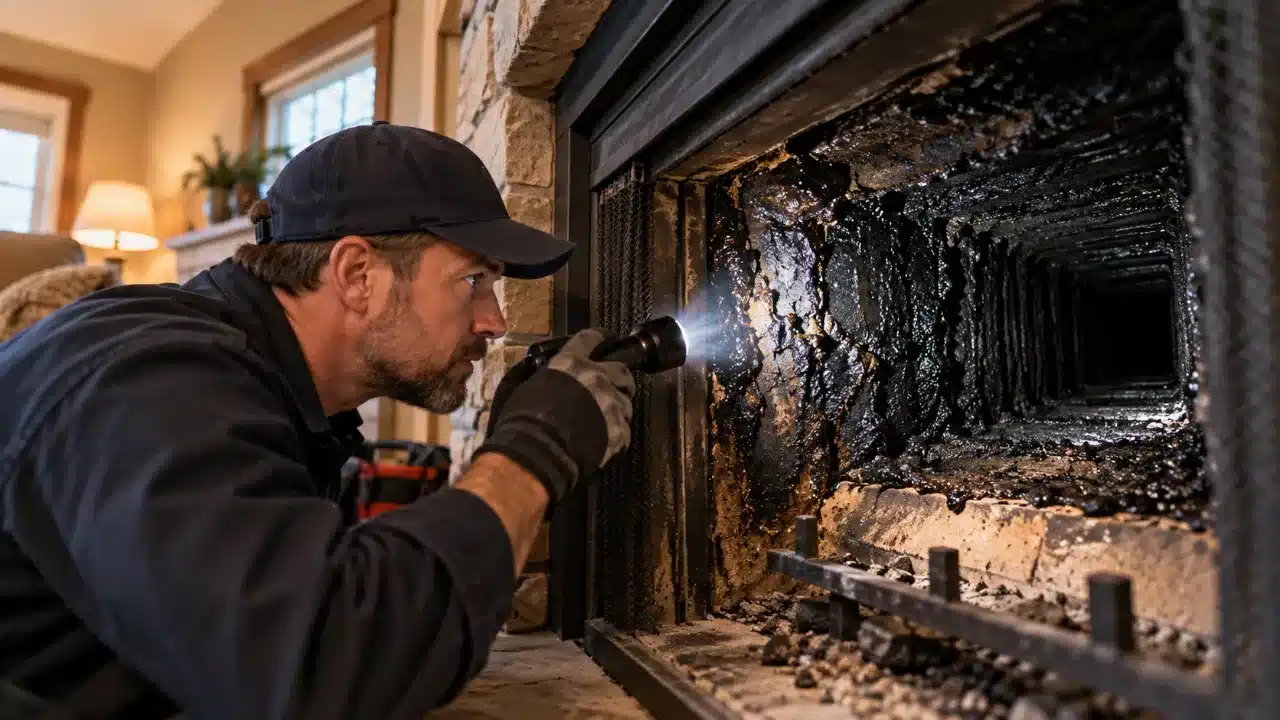
Glazed creosote often appears as a dark, shiny, hardened coating.
This type of buildup can be particularly difficult to remove and may require specialized professional treatment.
It can develop under conditions involving relatively cool flue surfaces, smoky combustion, and repeated condensation.
Why Is Creosote Buildup Dangerous?
The primary danger of creosote is its ability to ignite.
When enough combustible residue accumulates inside the chimney, exposure to sufficiently high temperatures or flames can result in a chimney fire.
Chimney fires may produce loud cracking or roaring sounds, but some occur without obvious warning signs.
Even a relatively brief chimney fire can damage flue liners, masonry, and surrounding components.
Heavy creosote accumulation may also contribute to restricted airflow, which can interfere with proper venting.
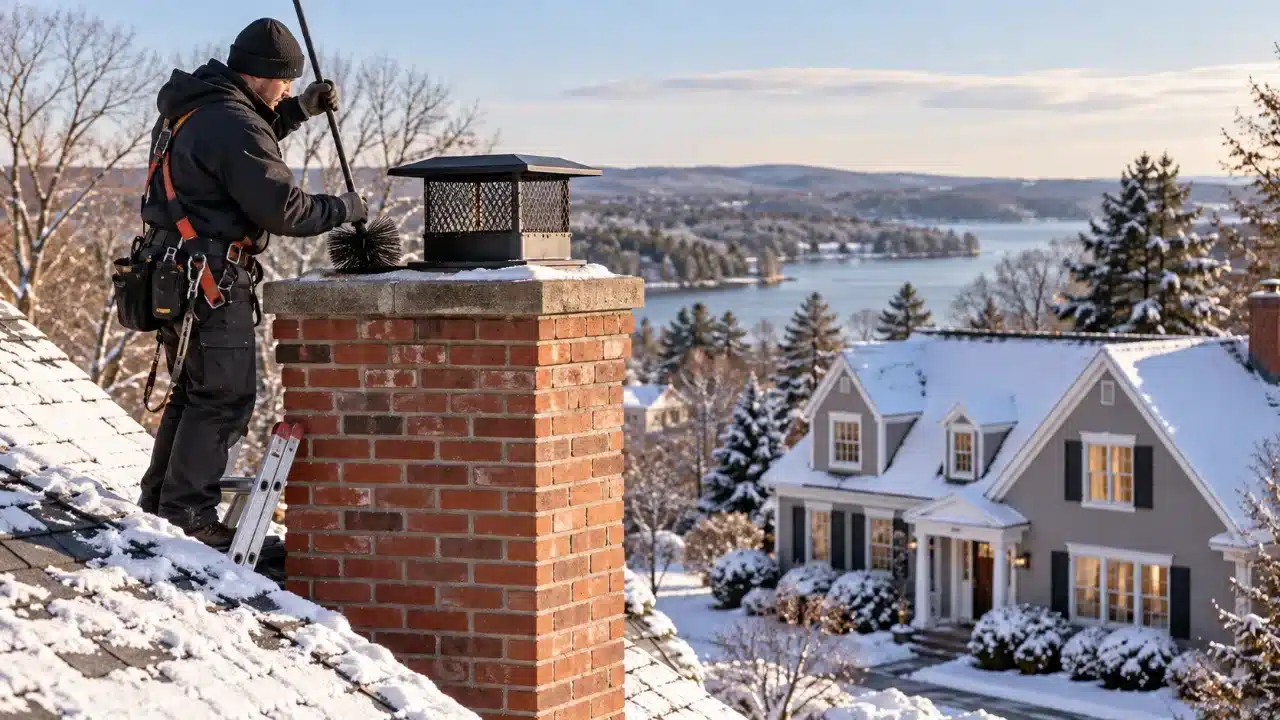
Scheduling professional chimney cleaning services helps remove deposits and reduce the risk associated with accumulated creosote.
However, cleaning does not eliminate every possible chimney hazard. Structural condition and proper appliance operation are equally important.
What Causes Excessive Creosote Accumulation?
Several common conditions can accelerate creosote buildup.
Burning wet firewood: Unseasoned wood contains excess moisture, which can produce smoky fires and contribute to additional deposits.
Restricted airflow: Poorly ventilated fires often burn less efficiently and produce more smoke.
Low combustion temperatures: Smoldering fires can create conditions that encourage creosote formation.
Cold chimney walls: Smoke cooling rapidly inside the flue can increase condensation and deposit formation.
Infrequent maintenance: Without routine sweeping, existing deposits remain in place and continue to accumulate.
Connecticut’s cold winter temperatures make proper fireplace operation and chimney maintenance especially important.
How Can You Tell If Your Chimney Has Creosote Buildup?
Creosote is not always visible from the fireplace opening.
However, homeowners may notice several possible warning signs.
A strong smoky or tar like smell coming from the chimney can indicate accumulated deposits.
Dark, shiny residue visible around accessible areas of the flue may also suggest creosote accumulation.
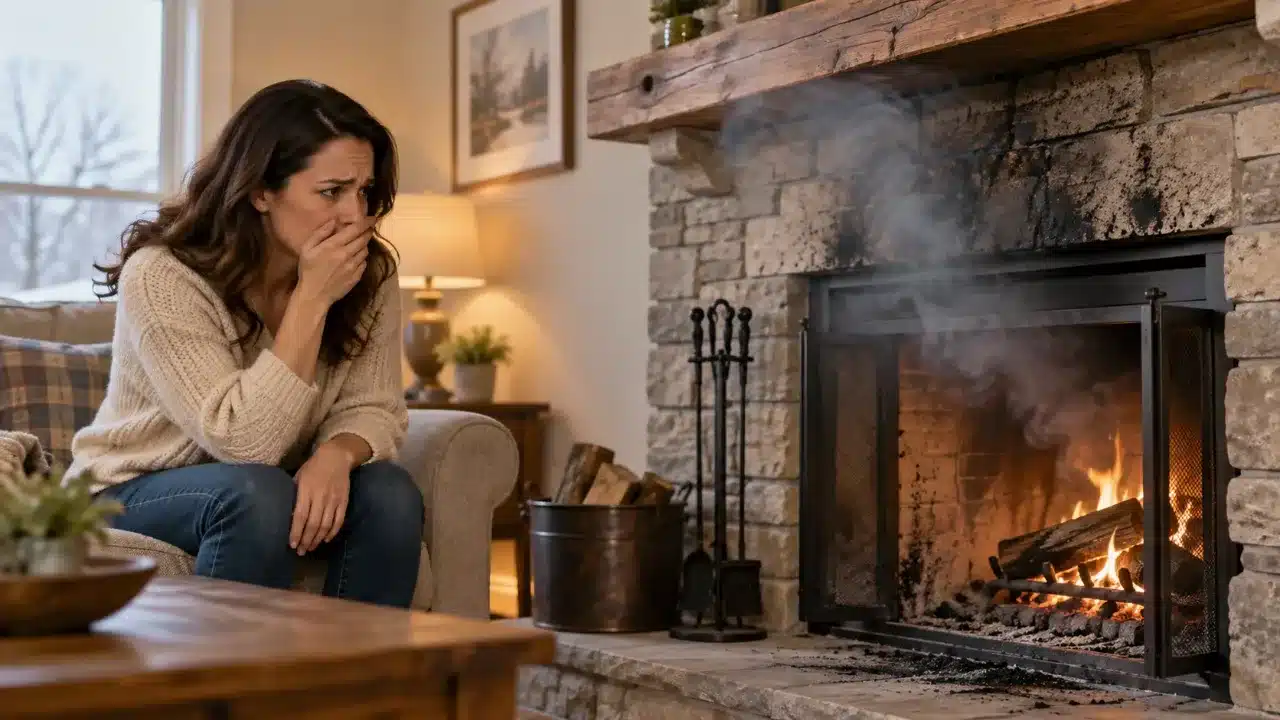
Additional symptoms can include excessive smoke, poor draft, or flakes of soot and hardened residue falling into the firebox.
These symptoms do not provide a reliable measurement of buildup, and their absence does not guarantee that the chimney is clean.
A professional chimney inspection can help assess the condition of the flue and identify deposits, damage, or other problems.
How to Prevent Creosote Buildup
Although some creosote formation is common in wood burning systems, homeowners can take several steps to reduce excessive accumulation.
Burn properly seasoned wood: Dry, appropriately seasoned firewood generally burns more efficiently and produces less smoke than wet wood.
Avoid prolonged smoldering fires: Proper combustion helps reduce the conditions that encourage heavy deposits.
Maintain adequate airflow: Follow the fireplace or stove manufacturer’s operating instructions for combustion air and draft.
Schedule routine inspections: An annual chimney inspection helps identify deposits and determine whether cleaning is necessary.
Arrange professional cleaning when needed: Removing accumulated creosote prevents deposits from continuing to build up over successive heating seasons.
Chimney cleaning logs and chemical treatments should never be considered complete substitutes for professional maintenance.
What Should You Do After a Suspected Chimney Fire?
If you suspect a chimney fire, stop using the fireplace and contact emergency services.
Do not attempt to extinguish a chimney fire by pouring water into the firebox or chimney.
Once the emergency is resolved, the system should remain out of service until a qualified professional has evaluated its condition.
Extreme heat can damage components that are not visible from inside the room.
A thorough inspection may reveal cracked liners, damaged masonry, or other conditions that require attention before the fireplace can be used safely again.
Keep Your Chimney Clean and Your Home Protected
Creosote is a normal byproduct of burning wood, but excessive accumulation should never be ignored.
Understanding how deposits form and following proper fireplace maintenance practices can significantly reduce avoidable chimney hazards.
For homeowners in Hartford, West Hartford, Glastonbury, Manchester, and other Connecticut communities, regular professional maintenance is an important part of preparing for winter.
Central CT Chimney helps Connecticut homeowners maintain their chimney systems through professional cleaning and inspection services.
The most effective way to manage creosote is to prevent excessive accumulation, recognize potential warning signs, and schedule maintenance before problems become dangerous.