Your chimney plays an important role in safely directing smoke and combustion gases out of your home. However, many homeowners do not think about chimney maintenance until their fireplace starts showing signs of trouble.
Over time, soot, creosote, animal nests, and other debris can accumulate inside the chimney. These materials may restrict airflow, create unpleasant odors, and increase fire risks.
Recognizing the warning signs early can help Connecticut homeowners avoid more serious fireplace problems.
Here are seven common signs that your chimney may need professional cleaning or further inspection.
1. Smoke Is Coming Back Into Your Home
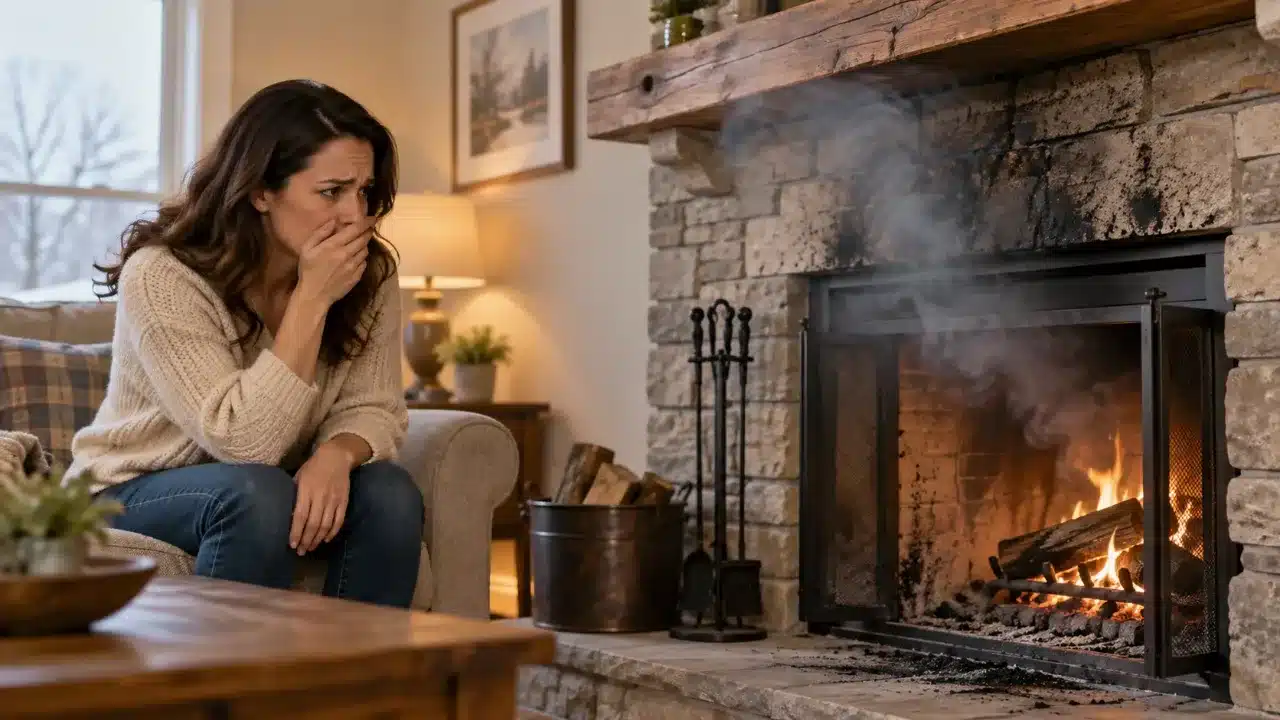
One of the most noticeable signs of a chimney problem is smoke entering your living space instead of traveling up the flue.
This may happen when soot, creosote, or debris restricts airflow. However, smoke problems can also result from negative air pressure, poor chimney design, or inadequate combustion air.
If smoke repeatedly enters the room when the fireplace is operating, stop using it until the cause has been evaluated.
2. Your Fireplace Has a Strong, Unpleasant Odor
A persistent smoky smell coming from your fireplace may indicate accumulated creosote or soot.
These odors are sometimes more noticeable during Connecticut’s warmer, humid months, when moisture and changes in air pressure can cause chimney smells to enter the home.
Professional chimney cleaning can remove accumulated deposits that contribute to these odors.
However, cleaning may not completely resolve the problem if moisture intrusion, negative air pressure, or another underlying issue is present.
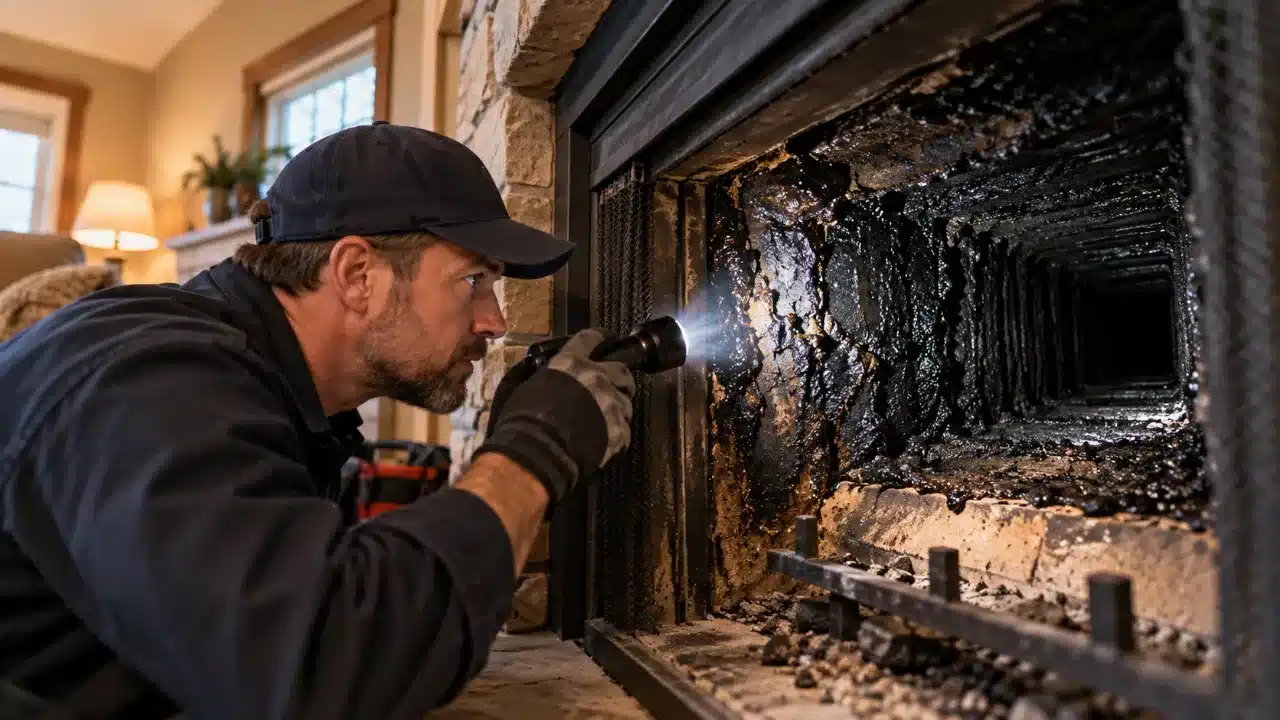
3. You Notice Black, Shiny Deposits Inside the Fireplace
Creosote forms when wood smoke cools and condenses on the interior surfaces of the chimney.
Depending on its composition and the conditions under which it formed, creosote may appear as flaky soot, hardened deposits, or a shiny, tar like coating.
Shiny, glazed creosote is particularly concerning because it can be difficult to remove and may represent a significant fire hazard.
Homeowners should not attempt to scrape hardened deposits with improvised tools or use chemicals without professional guidance.
A qualified chimney professional can evaluate the type and severity of the buildup and recommend an appropriate cleaning method.
4. The Fireplace Is Difficult to Start or Keep Burning
A fireplace that consistently struggles to maintain a fire may have a draft problem.
When airflow is restricted, combustion becomes less effective. This can result in weak flames, excessive smoke, and difficulty maintaining a steady fire.
Although chimney blockages can contribute to these symptoms, other factors such as wet firewood, insufficient combustion air, and cold flue conditions may also be responsible.
If the problem persists, a professional assessment can help determine the cause.
5. You Hear Animal Noises Coming From the Chimney
Birds, squirrels, and other small animals sometimes enter chimneys in search of shelter.
Nesting materials can obstruct the flue and prevent combustion gases from escaping properly. Leaves, branches, and other outdoor debris may create similar problems.
If you hear scratching, fluttering, or other unusual noises from the chimney, avoid using the fireplace until the situation has been addressed.
Do not attempt to start a fire to drive animals away. This can be dangerous and may harm trapped wildlife.
A professional can assess the obstruction and determine whether wildlife removal or additional assistance is necessary.
6. Soot or Debris Is Falling Into the Firebox
Small amounts of soot may be present around a wood burning fireplace, but excessive debris falling into the firebox can indicate an accumulation inside the chimney.
You may notice dark flakes, pieces of hardened creosote, or other material collecting around the fireplace opening.
Falling debris can also be associated with deteriorating chimney components.
A professional chimney inspection helps determine whether the material is simply an accumulated deposit or evidence of a problem with the chimney structure.
7. You Cannot Remember the Last Chimney Cleaning
One of the most overlooked warning signs is an unknown maintenance history.
Even if your fireplace appears to function normally, deposits can accumulate gradually without producing obvious symptoms.
Annual chimney inspections are recommended to evaluate the condition of the system and determine whether cleaning is required.
This is particularly important for homeowners who have recently purchased an older Connecticut property or have not maintained their fireplace for several years.
What Happens During a Professional Chimney Cleaning?
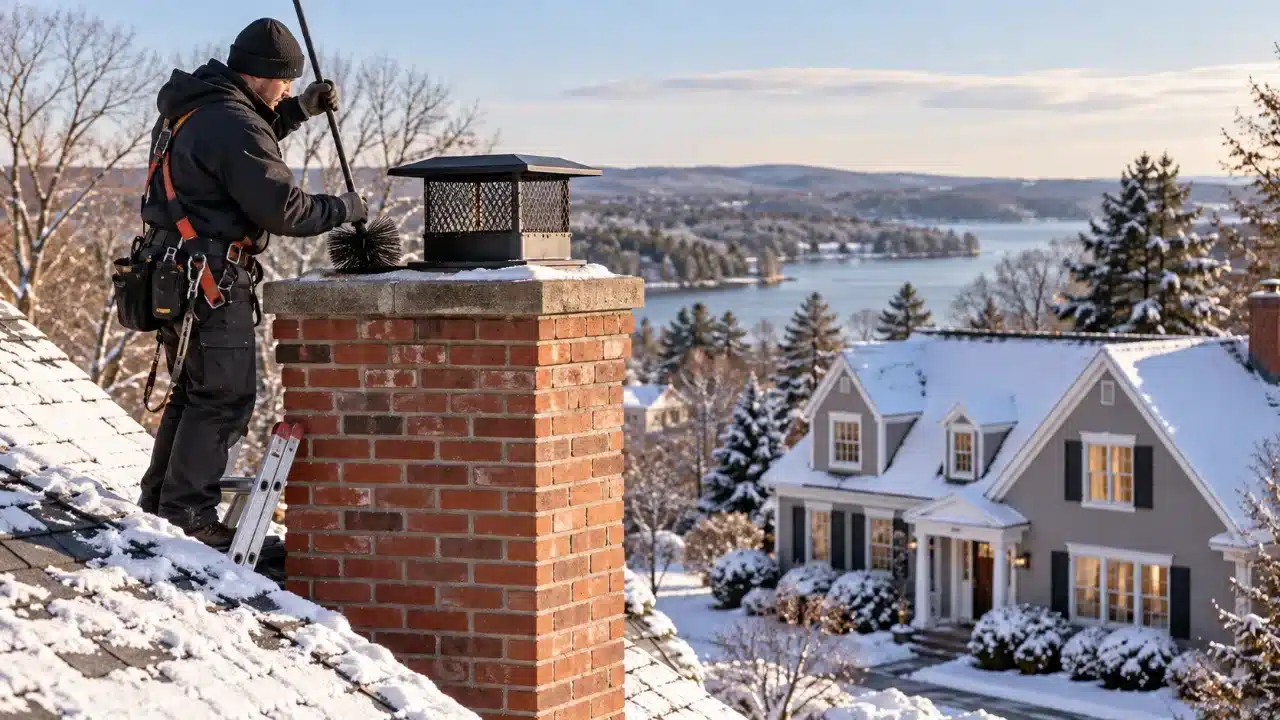
A professional chimney cleaning typically involves removing soot, creosote, and accessible debris from the flue.
The technician may also clean the firebox and smoke shelf, check for obvious obstructions, and observe the condition of accessible chimney components.
If the cleaning reveals visible damage or suspected structural issues, additional inspection or repairs may be recommended.
For example, a cracked flue liner or deteriorating chimney crown may require professional chimney repair rather than cleaning alone.
Addressing the underlying cause is essential when the problem involves more than ordinary soot accumulation.
Protect Your Fireplace Before the Heating Season
Connecticut homeowners often rely on fireplaces during the coldest months of the year.
Recognizing symptoms such as smoke entering the room, unusual odors, heavy creosote deposits, and poor draft can help identify chimney problems before they become more serious.
Central CT Chimney provides professional chimney maintenance services in Hartford and throughout Connecticut, including cleaning, inspections, and repairs.
If your fireplace is showing any of these warning signs, arrange a professional evaluation before using it again.